Every number,
one place
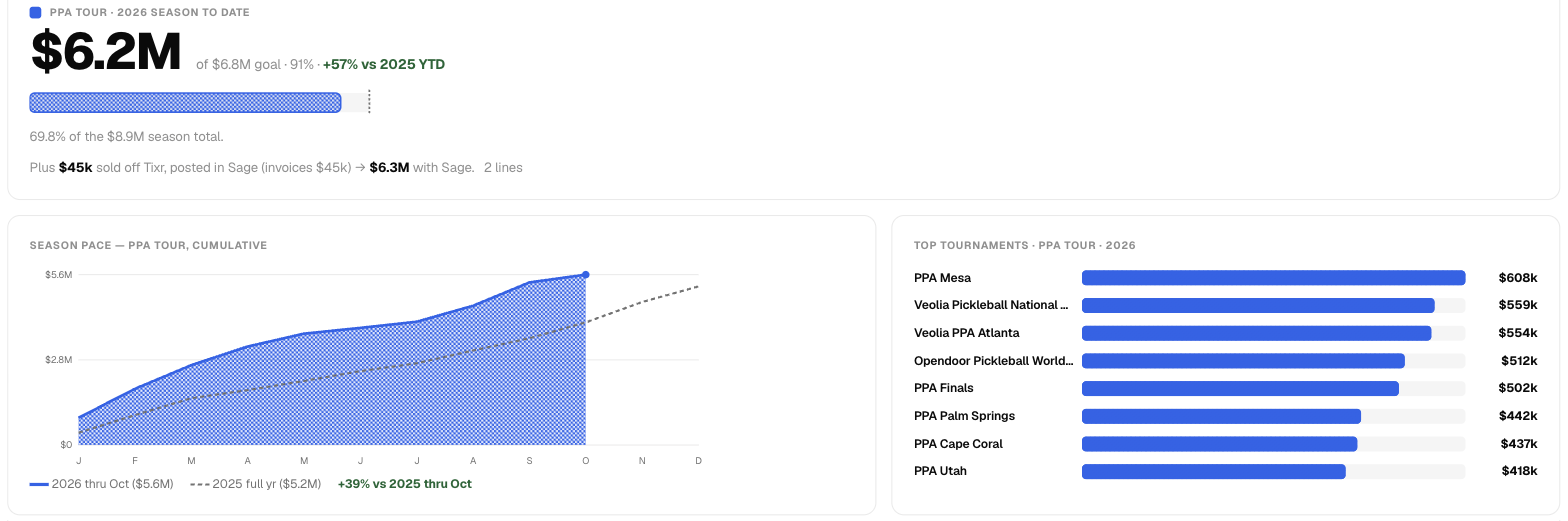
Metrics stop living in a dozen tools. Jackalope pulls them into a single screen that answers the three questions leadership actually asks.
- How are we doing — against plan, not against last week's guess
- What's coming — the next 90 days, already loaded
- Who's on what — every objective with a name attached
The receipts
match themselves
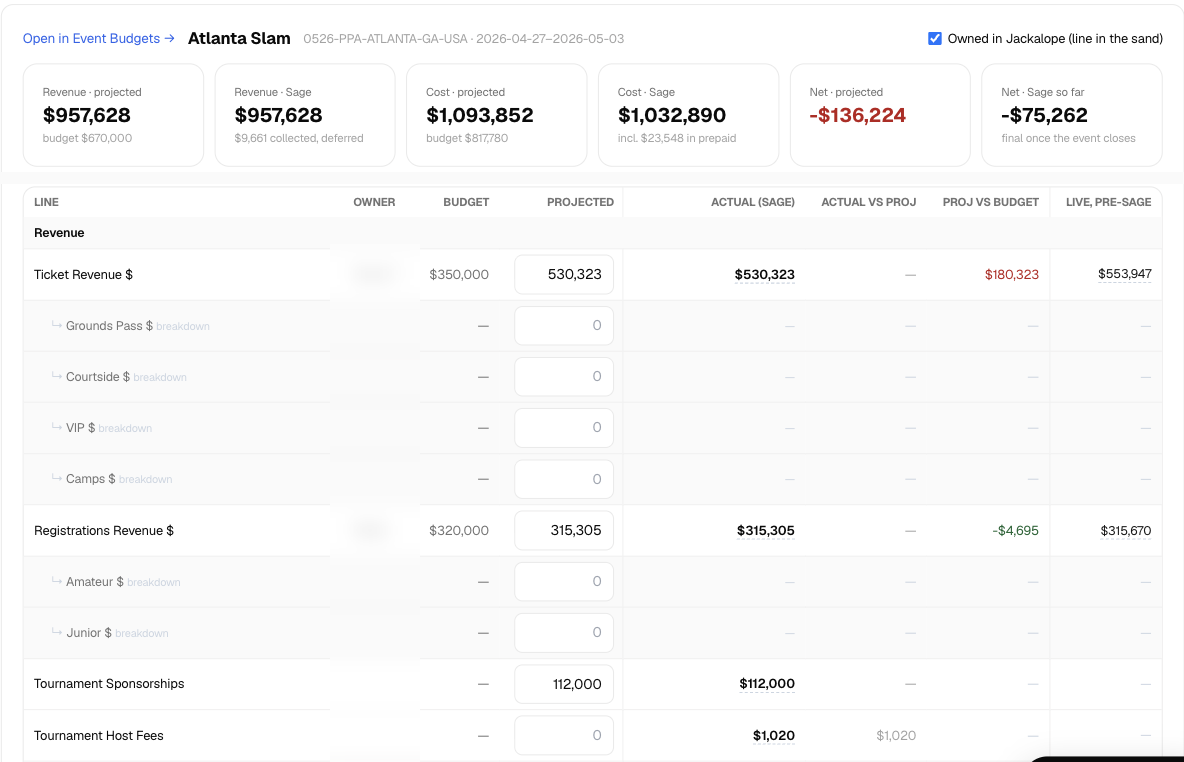
Every transaction is matched to its receipt or invoice automatically, and posted against the job it belongs to. What used to be a week of spreadsheet archaeology is a short list of exceptions.
- Card feed in, receipts in — matched on amount, date, merchant and job
- Only exceptions surface — the handful a person genuinely has to look at
- Close doesn't wait — the ledger is current, not reconstructed
Work gets planned
where it gets paid
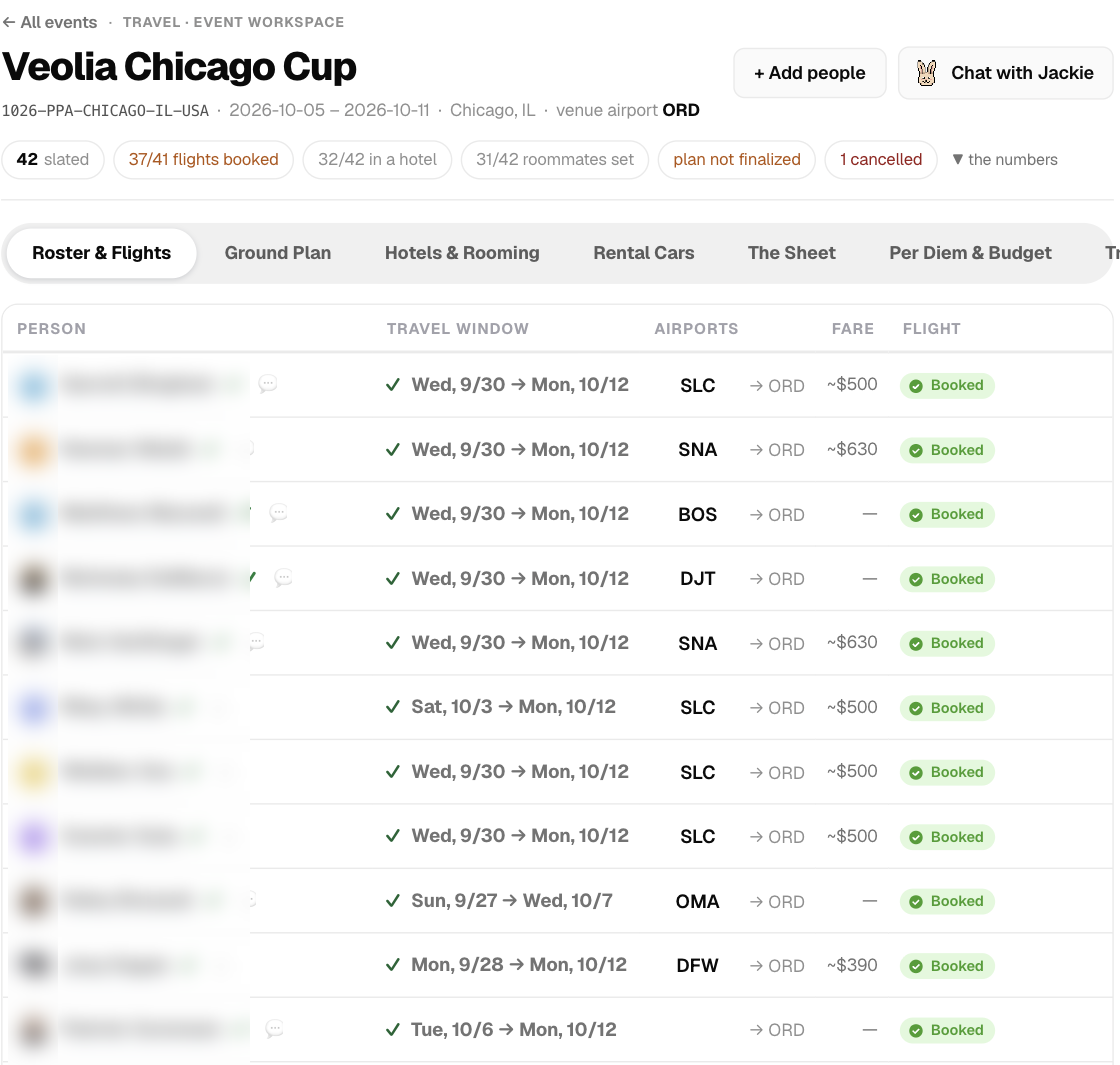
A job, an event, a build, a campaign — whatever your unit of work is, it gets planned in the same system that pays for it. So its true cost is known while it is happening, not a month after.
- One record per job — people, dates, location, budget, spend
- Spend lands on the job — no orphan charges to chase down
- Margin per job, not per quarter — you see the loser while you can still fix it
Objectives and tasks,
on the same screen as the money
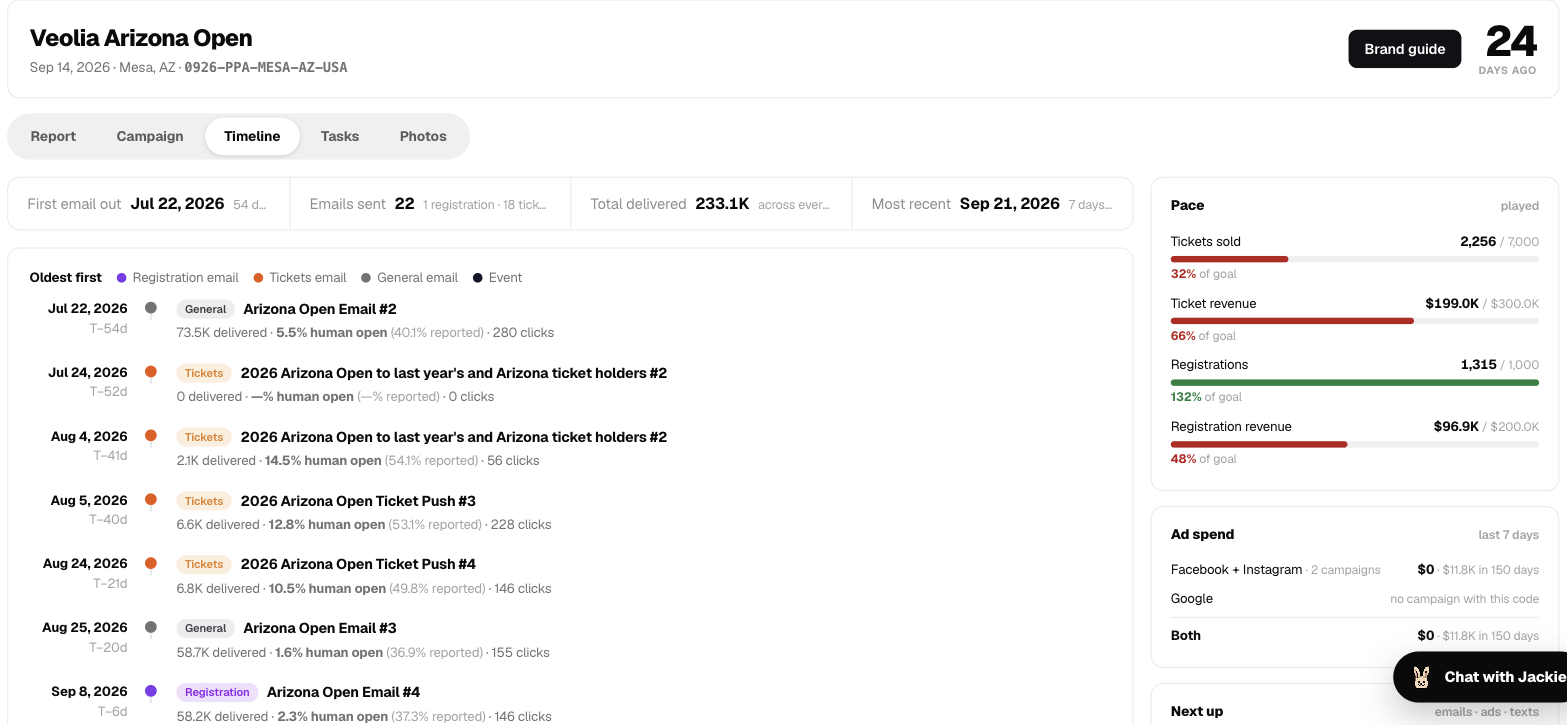
Every objective carries the work under it and the person accountable for it. Nobody has to assemble a status update — the status is the page.
- Objective → tasks → owner — one chain, visible top to bottom
- Drift shows early — behind is a state, not a surprise
- No parallel tracker — the deck and the work are the same object
A clean financial picture,
with growth on top
Leadership gets the real picture plus the models that sit on it — instead of rebuilding both by hand every time somebody asks.
- Actuals, not estimates — the model is fed by the reconciled ledger
- Scenarios side by side — plan, upside, downside, same axis
- Answer in the room — not next Thursday
Your source of truth.
Not a seat you rent.
Jackalope isn't another tool to log into. It's your instance, shaped to your business, replacing the pile of subscriptions the answer is currently scattered across.
- Your own instance — configured to your record, not a template you bend to fit
- Your data stays yours — one company, one hub, exportable
- It removes tools — the point is a shorter stack, not a longer one
- It grows with the business — new modules attach to the record you already have